
How an AI photo booth changes the traffic pattern at your stand
A trade show stand competes with hundreds of others for the same walk-past. The value of an AI booth is not the photo, it is the reason to stop.
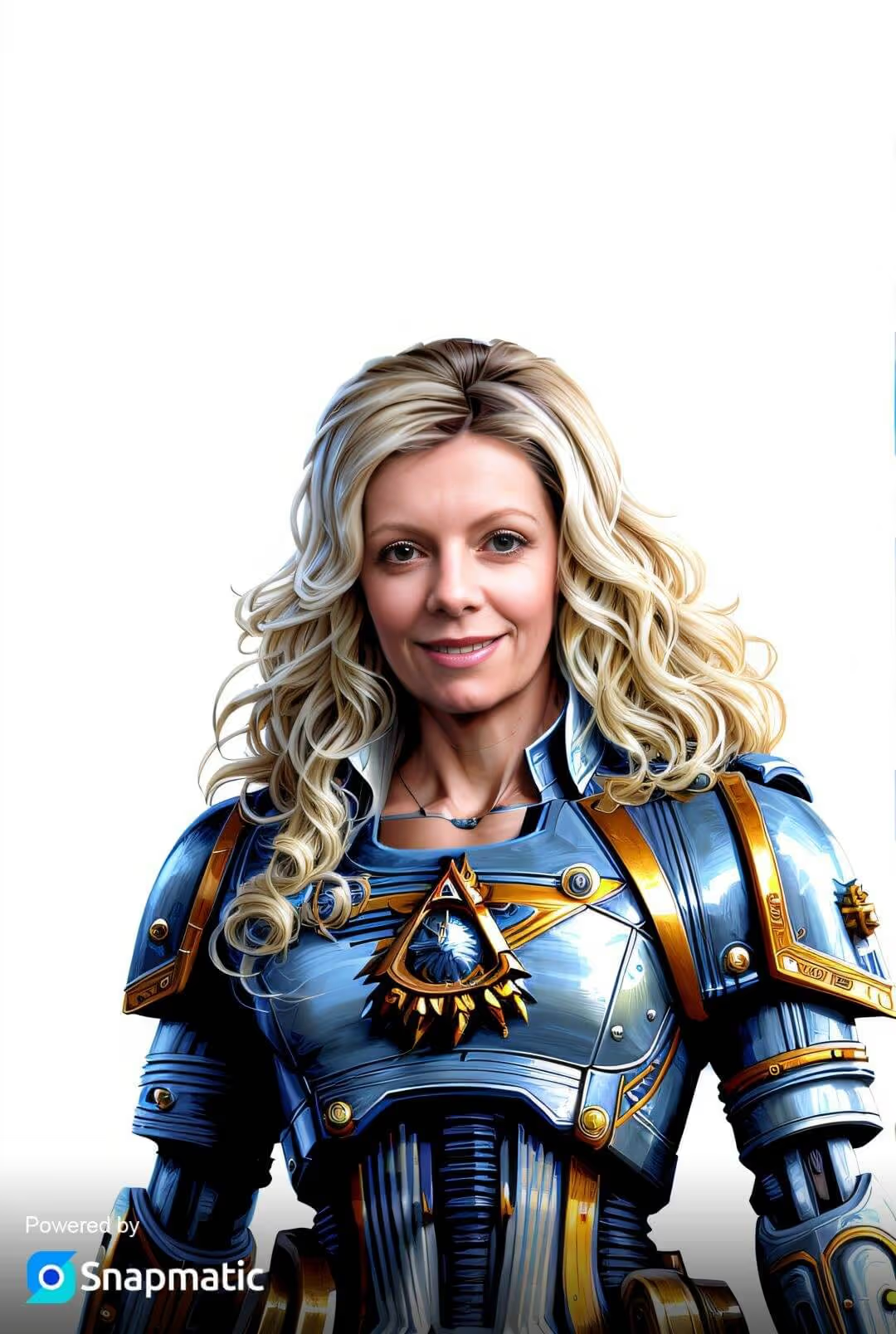
Everybody who has worked a stand knows the walk-past. Visitors move down the aisle at a steady pace, eyes forward, having already decided that stopping means being sold to. The entire economics of the show depend on interrupting that walk, and most stands try to do it with a message on a banner.
Stopping is the hard part
An AI photo booth interrupts differently, because the thing on offer is not information. It is output. A visitor stops because they can see something being made, and because what is being made features somebody like them rather than a product they have not heard of.
The second-order effect matters more. Once someone has stopped, there is a natural pause while the image renders, and that pause is a conversation your team did not have to force. Nobody has to open with a pitch. They can open with the obvious question about what the guest wants their theme to look like.
What changes on the floor
- Dwell time goes up without a giveaway pile to defend
- The team gets an opening line that is not a pitch
- The stand becomes visible from further down the aisle, because a small crowd is a signal
- Visitors leave with content that carries the brand onto their own feed
The booth does not replace the conversation. It buys the thirty seconds where one can start.
The mistakes worth avoiding
The first is gating. Putting a data capture form in front of the experience kills the throughput that made it work, and the visitor who would happily have given a card afterwards will not fill in six fields to see a photo. The second is a generic theme. If the output could have come from any stand at the show, it will not be shared, and an unshared image is just an expensive photograph.
The third is treating the booth as the whole activation. It is a mechanism for creating stops and starting conversations. What happens in those conversations is still down to the people standing on the stand.